A CBD merchant account shutdown rarely arrives as a long, polite letter. It arrives when the next swipe fails, the payout screen greys out, or a banner says the file is restricted. Money that already left a customer’s card can still sit in a batch that has not settled, and the open orders keep coming. The next hours are about those batches, the notices, and the file you will need if you apply somewhere that actually underwrites hemp and CBD. They are not about a promised replacement date. Underwriting is always the sponsor bank’s call.
What actually happens to money already in flight
Authorized sales can still sit in an unsettled batch, a paused deposit, or a rolling reserve after the file dies. A card sale is a chain, not a cash drawer. The processor authorizes the card, captures the sale, batches it, and the sponsor bank settles a deposit. Shutdown can break that chain at more than one point, which is why the dashboard and the bank feed disagree on the same morning.
New swipes and new checkouts usually die first. The authorization is refused, so nothing new enters the pipeline. That is the part you feel at the counter.
Sales that already authorized are a different problem. If the batch has not settled, those funds are still in flight. Some providers let the open batch finish on the normal deposit calendar. Others hold residual funds while they review refunds, chargebacks, and whether the live catalog matched the original application. You will not know which case you are in until you read the closure notice and the provider’s current published terms. Check those terms on the provider’s own site. A support chat is not the contract.
If the account carried a rolling reserve, that money was already being held back against disputes. A rolling reserve releases each batch after a set period, so it behaves like a permanent delay on part of cash flow. Closure does not turn that delay into cash. The remaining hold typically keeps running until the period ends, or it is applied to chargebacks that land after the file is dead. Chargebacks can still arrive. A fee applies per chargeback, and the closed processor can take it from whatever they still hold.
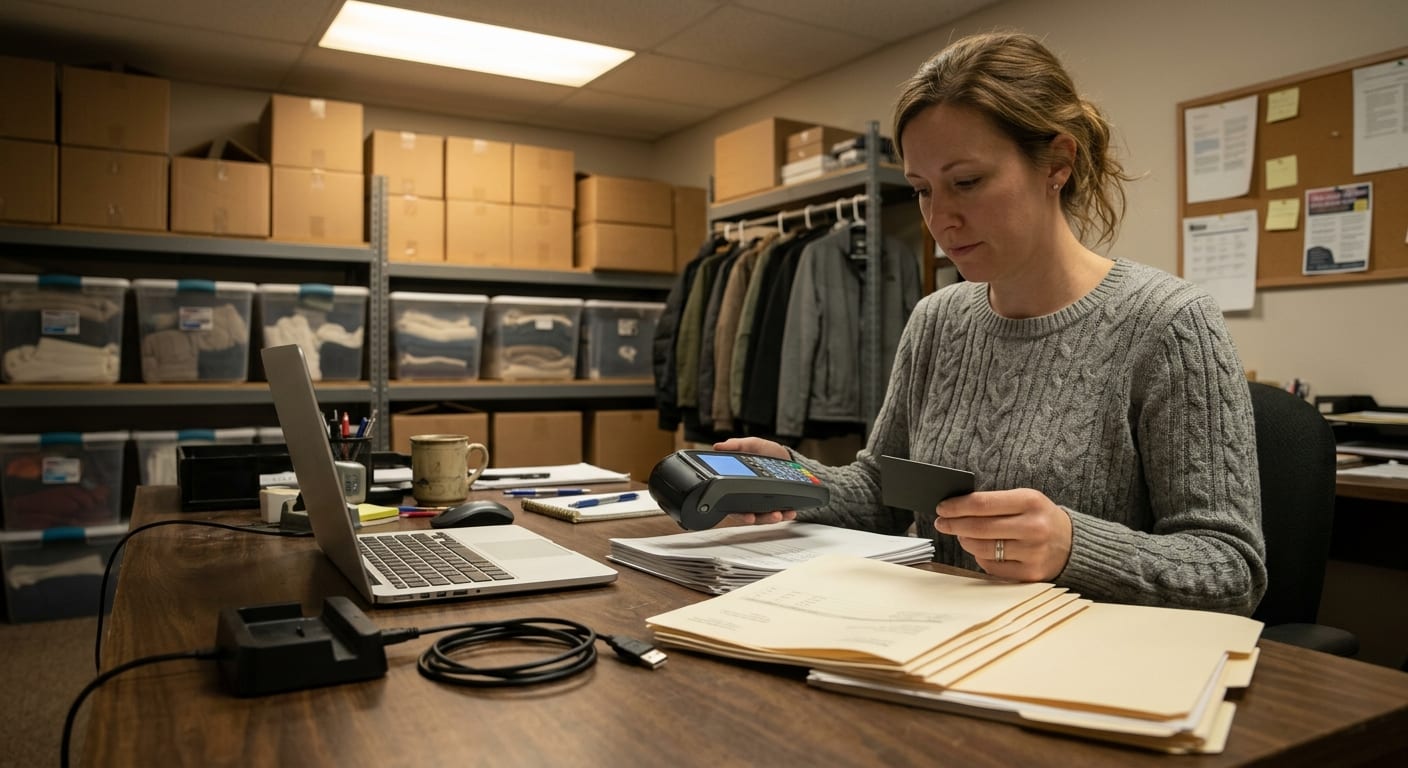
Do not spend money you cannot see in the bank. Export every processing statement, payout report, and reserve notice you can still reach, including the emails that announced the freeze. Screenshot the dashboard if exports are already locked. That packet is the clean record of volume, average ticket, refunds, and disputes. The next underwriter will want it. So will you, if a customer asks where their refund went.
Do not replace the dead card rail with a cashless ATM. The transaction is coded as something it is not, network rules do not allow it, and the merchant carries the consequences. We do not sell them and we do not call them card acceptance. The mechanism is on our cashless ATM risks page.
The first two days: freeze, notices, and open orders
Day one is triage, not shopping for a new processor. Restricted usually means new cards are blocked or tightly limited, and payouts are paused, while the file is still visible. Closed or terminated means the merchant ID is done. Treat both as a stop on new volume. An authorization that sneaks through on a dying file can still bounce, and then you have a customer who thinks they paid.
Read the notice twice. Save the subject line, the timestamp, and any case number. Download the statements while you still can. If the email points you at a policy page, open that provider’s current published terms, not a recap from last year. This site already publishes that Stripe, Square, and PayPal ban hemp and CBD outright in their published policies, and that most merchants who arrive here were shut off by one of them. Those pages move. Confirm the language yourself.
Then look at open orders. Carts that authorized but never captured should not be captured on a frozen MID. Carts that captured and have not shipped need a decision you can defend: hold the box, issue a refund from residual funds if the processor still lets you, or contact the customer with a way to pay that actually still works. Cash in the store is still cash. A new card on a dead account is not.
Do not rewrite the product pages overnight to look like a vitamin shop. Miscoded accounts and disguised transactions get frozen, and the merchant absorbs the loss when it unwinds. We will not set one up, and we will not tell you to describe the catalog as something it is not.
Do not fire applications at five aggregators before lunch. Each rushed file is another record of the same URL, the same SKUs, and a shutdown you have not explained. Get the packet together first. Then talk to someone who places hemp and CBD on purpose.
Why aggregators close hemp and CBD files without a long warning
An aggregator boards huge numbers of ordinary shops with light review, then watches them with software. That model is why a CBD store can go live on a famous checkout and still lose the file later. The signup form never really underwrote hemp. The monitor did.
Open the source, not a rumor. Check Stripe’s restricted businesses list and PayPal’s acceptable use policy on their own sites, and do the same on Square’s current published page. Providers change terms. Our roundup of processor policies for hemp and CBD is how we read those pages. It is not a substitute for the source.
Hemp has been federally legal since the 2018 Farm Bill, which defines it as cannabis containing no more than 0.3% delta-9 THC on a dry weight basis, and which removed it from the federal definition of marijuana. That fact does not force a card network or an aggregator to carry the sale. Cannabis remains a federally scheduled substance under the Controlled Substances Act, which is why the major card networks do not carry plant-touching sales the way they carry ordinary retail. The FDA has stated that CBD may not be lawfully added to food or marketed as a dietary supplement under the current framework. A product page that sounds like a treatment, a food, or a supplement is a review trigger even when the jar on the shelf is hemp.
The kill is often automatic. A SKU title, a lab PDF, a new collection, a subscription offer, or a jump in volume can fail a rule that no human read that morning. Chargebacks rising can do the same. Crossing the ratio thresholds the card networks publish can mean a monitoring program with additional cost and requirements, or account closure. Ask the next provider for those thresholds in writing. We are not going to invent them here.
Policy change is the other silent closer. An aggregator can exit a category because the bank behind it changed appetite, not because you cheated. That is still a shutdown. It is not a verdict on whether you may sell the product in your state. Your state regulator and your own counsel own that question. Some states layer testing and labelling on top of hemp. A processing email is not a statute.
What to put in the next file so the same story does not repeat
The next underwriter is going to reconstruct the business you actually run. A clean file is slower than a lie and cheaper than a second shutdown.
Start with three months of processing statements, or every month you have if you are newer. They show volume, average ticket, refunds, and chargebacks. Add the closure notice and a short, plain note on what the old provider said. Then add certificates of analysis for the SKUs you actually sell, matching the names on the site. If the site says one thing and the lab PDF says another, the file stalls.
Site copy has to match the catalog. If you sell CBD, say CBD. Do not bury it, and do not dress it as a medical claim. Pull anything that reads like a treatment, a dose, or a cure. Put the refund rules on the page the way you actually refund, including subscription cancels if you bill on a cycle. Underwriting reads the live URL, not the pitch deck.
Get the merchant category code in writing, the code the transactions will settle under. Never recode the account to look like ordinary retail, and never park the sales in a shell company. We will not set that up.
What moves a quote is category, monthly volume, average ticket, chargeback history, and time in business. Two similar stores can get very different numbers. We put the full cost structure in writing before you commit, and we put figures on paper after we see the statements. There is no rate card on this site, on purpose. The mechanism behind interchange, markup, reserves, and statement fees is on our pricing page.
Bring that packet to a conversation about a real CBD merchant account, not another aggregator signup. If you want a person on it, call (844) 860-5505 or use contact. We will tell you straight what we can place and what a bank still has to decide. No honest answer to whether you will definitely be approved is yes.
Where a dedicated merchant account differs from an aggregator
A dedicated merchant account is a file underwritten in your name, for the catalog you disclosed, at a sponsor bank that agreed to look at hemp or CBD. An aggregator drops you into a shared bucket and watches you with rules. That is the difference that matters after a shutdown.
On an aggregator, the first review is thin. The second review is the one that kills you, and it can happen months later when a product title, a lab, or a policy update trips a filter. On a dedicated file, the bank’s underwriting is supposed to happen before cards run. They still monitor. They still care about chargebacks, catalog drift, and claims language. They are not a shield. They are a bank that already knew what you sell.
That is why high-risk processing is a structure, not a slogan. High-risk accounts can carry a reserve, a rolling reserve, or chargeback fees, and those affect cash flow more than the rate does. Ask for each of those in writing. A blended single number is how a markup gets hidden.
If the vocabulary is still fuzzy, read what a CBD merchant account actually is. The short version: it is the banking relationship that settles card sales for a CBD catalog, not a plugin and not a promise. Rooted Payments is an independent payments brand. We are not a bank, not a lender, not an acquirer, and not an underwriter. Our job is placement. We learn how the shop actually works, then match it to processing and point-of-sale that can hold up under underwriting. Approval stays with the sponsor bank.
A dedicated file can still close. If you add a new line without telling anyone, if disputes pile up, or if the live site stops matching the application, you are back in the same morning. The point of doing the file honestly is not immortality. It is that the next review is about the business you disclosed, not a surprise the monitor found.
Frequently asked questions
What is a CBD merchant account? A CBD merchant account is a dedicated processing file underwritten for a catalog that includes CBD, so card sales can settle under a sponsor bank that agreed to look at that category. It is not a checkout plugin, and it is not an aggregator’s shared bucket.
What does it mean when the merchant account is restricted? Restricted usually means new cards are blocked or limited and payouts are paused while the provider reviews the file. It is not the same sentence as terminated, but you should treat both as a stop on new volume until you read the notice and that provider’s current published terms.
Why are credit cards being closed on CBD shops? Often because the provider’s published policy bans hemp and CBD, because site copy or SKUs tripped a monitor, because disputes rose, or because the bank behind an aggregator changed appetite. Hemp’s federal definition did not force those platforms to carry the sales. Check the closed provider’s own current policy page for the reason they gave you.
Which payment processor is best for CBD merchants? There is no honest single winner, and anyone who names one without seeing your statements is selling. The useful split is an aggregator versus a dedicated file that was underwritten for the actual catalog. We place. We do not approve. Anyone guaranteeing approval in this category is guessing or lying.