Card money never goes straight to your bank, and what is a merchant account used for starts right there: it receives settlement first, carries the identity your transactions travel under, records the products you disclosed at underwriting, and holds the acquiring bank decision that lets you keep taking cards. Four jobs, one account.
What is a merchant account used for? Four jobs at once
Receiving settlement. Approved card sales settle into the merchant account first, then move to your business checking account. That gap of a day or two is the account doing its work rather than a delay.
Carrying your identity. The account holds your merchant identification number, and every transaction you originate travels with it plus a code describing what kind of business you are. Networks and issuers can look at both later.
Recording what you disclosed. Your application is part of the account. The products you named at underwriting are what the acquirer approved, which is why an accurate application is worth more than a fast one.
Holding the risk relationship. Somebody at the acquiring bank formed a judgement about your business, and this account is where that judgement lives. It can be revisited if your processing changes shape or your disputes climb.
How it differs from the accounts people confuse it with
| What it is | What it does | Who owns it |
|---|---|---|
| Merchant account | Receives card settlement, carries your merchant ID and your disclosed category | You, sponsored by an acquiring bank |
| Business checking account | Holds your operating cash after settlement lands | You, at your bank |
| Payment gateway | Captures the card online and passes the transaction to processing | Your gateway provider, connected to your account |
| Aggregator sub-merchant slot | Lets you take cards under somebody else’s master account | The platform, not you |
The last row is the one that catches people. Boarding onto a large platform feels like getting a merchant account, and it is not one. It is space on theirs, which is why a category review there can end your acceptance without any decision about you specifically.
What it is not used for
It is not somewhere to hold operating cash. Funds pass through, they do not sit.
It is not a way to make a restricted category look like something else. An account opened by describing hemp products vaguely is an account that closes when anybody reads the file properly, and held settlement is the usual second act.
It is not a route around federal law. Cannabis remains federally scheduled, and no hemp arrangement extends to plant touching sales. It is also not what a cashless ATM is. Those schemes dressed retail sales up as cash withdrawals, the card networks acted against the practice, and merchants relying on them carried the exposure. We do not sell them, and our cashless ATM page explains why nobody should.
What changes when your products are restricted
For most retail businesses the account is a commodity that nobody thinks about twice. For a hemp, CBD, kratom or smoke shop operator, the account is the part of the business most likely to fail, and the four jobs above are exactly why.
The disclosure job matters more, because the category you named is your protection later. The identity job matters more, because your coding is visible. The risk job matters most of all, because a category the acquirer never expected is the thing that triggers a review.
That is the argument for underwriting that knew your catalogue on day one, which is the subject of our CBD merchant account page and, on the raw material side, our hemp merchant account page.
When you need your own rather than somebody else’s
If card acceptance stopping would stop your business, you need your own. If you sell a category the big platforms restrict, you need your own. If you process continuously rather than seasonally, the same answer applies.
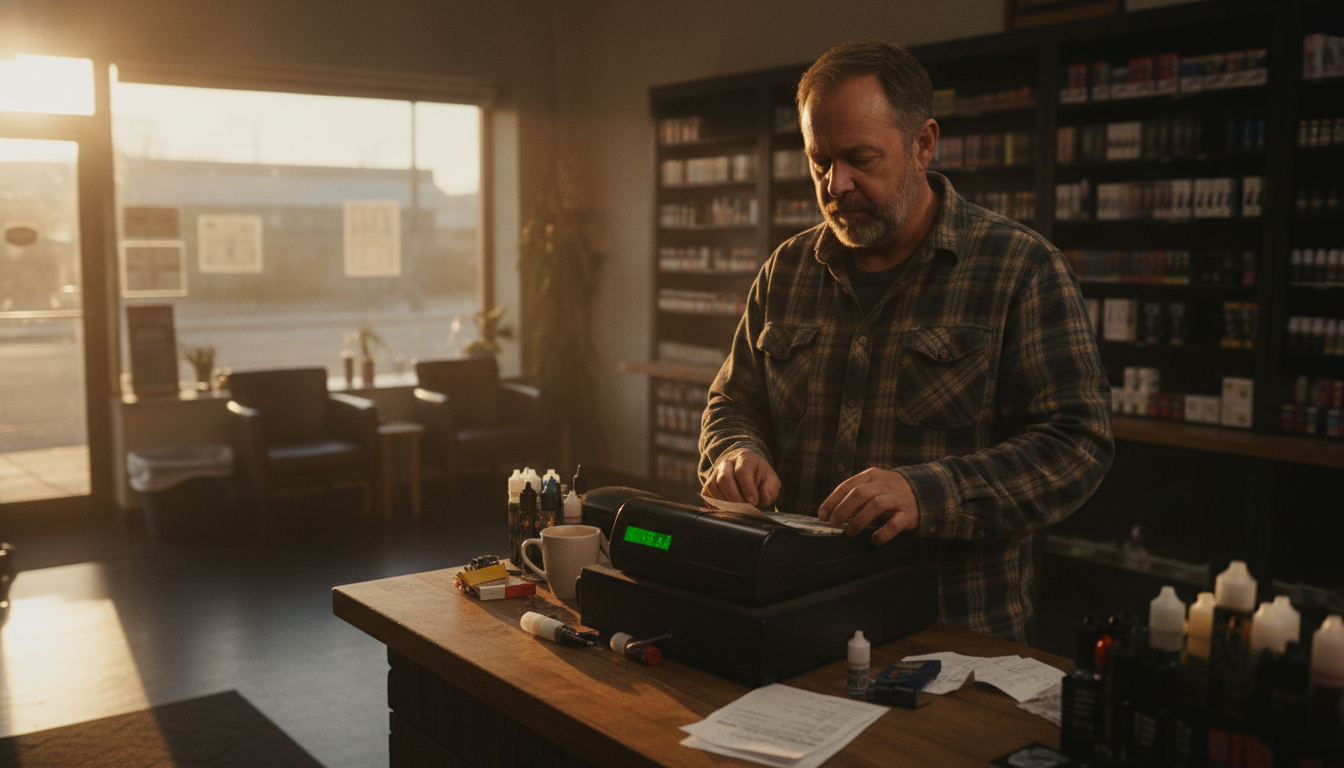
A sub-merchant slot is a reasonable place to start a very small operation, and a poor place to build one. The deeper comparison sits in what is a CBD merchant account, and if you sell in person the counter side is covered on our vape shop POS page.
Frequently asked questions
Do I need a merchant account and a business bank account? Yes, both. The merchant account receives card settlement, then deposits into your business checking account. They are usually held at different institutions and they do different jobs.
Can I have more than one? Yes, and businesses selling several product types sometimes do. Each one has its own underwriting and its own disclosed category, so keep the products separated the way the applications describe them rather than mixing volume across accounts.
What is a merchant identification number for? It identifies your account on every transaction, statement and dispute. Keep it to hand, because it is the first thing anybody asks for when a payment problem needs investigating.
Who can close my account? The acquiring bank, on notice set out in your agreement. That is true everywhere, including at platforms that never called it underwriting. The protection is an accurate file and a clean dispute record, not a promise from a salesperson.
How do I know what my account is coded as? Ask your provider directly and get the answer in writing. If the code does not match what you actually sell, raise it, because a mismatch is a problem you want to find before a review finds it. Tell us what you sell if you want a second read on it.